
Some of the best pasta dishes in the world come from just a handful of ingredients put together the right way.
These 20 recipes cover the classics everyone should know, a few American favorites that have earned their place at the table, and a handful of slightly elevated options that feel special without requiring much extra effort.
Every recipe is written in full detail so you know exactly what to do from start to finish.
What You Will Need to Keep on Hand
Stocking these basics means a great pasta dinner is always within reach.
- Spaghetti or any long pasta
Penne, rigatoni, or any short pasta - Ground beef or ground pork
- Pancetta or bacon
- Eggs
- Heavy cream
- Canned diced or crushed tomatoes
- Tomato paste
- Chicken broth or beef broth
- Butter
- Olive oil
- Garlic, fresh
- Yellow onions
- Parmesan cheese, wedge or pre-grated
- Mozzarella cheese, shredded or fresh
- Salt, black pepper, red pepper flakes, Italian seasoning, dried oregano, and dried basil
Classic Spaghetti Bolognese

Ingredients
- 1 lb spaghetti
- 1 lb ground beef
- 1/2 lb ground pork, optional, or use all beef
- 1 can crushed tomatoes, 28 oz
- 2 tbsp tomato paste
- 1 small yellow onion, finely diced
- 2 medium carrots, finely diced
- 2 stalks celery, finely diced
- 4 cloves garlic, minced
- 1/2 cup whole milk
- 1/2 cup dry red wine or beef broth
- 2 tbsp olive oil
- 1 tsp dried oregano
- 1 tsp salt
- 1/2 tsp black pepper
- Grated Parmesan for serving
Instructions
Heat the olive oil in a large heavy pot or Dutch oven over medium heat.
Add the diced onion, carrots, and celery.
Cook for 8 to 10 minutes, stirring occasionally, until all three vegetables are completely soft and the onion is translucent.
This base of aromatics is called a soffritto and it is the flavor foundation of a proper Bolognese.
Taking the full time here rather than rushing past it makes a real difference in the depth of the finished sauce.
Add the minced garlic and stir for 30 seconds.
Add the ground beef and pork if using.
Increase the heat to medium-high and cook the meat, breaking it into small pieces with a wooden spoon, until fully browned with no pink remaining.
Keep breaking it down into finer pieces throughout the browning process.
The smaller the pieces the more evenly they cook and the better they integrate into the sauce.
Drain the excess fat.
Add the tomato paste and stir it into the meat mixture.
Cook for 2 minutes, stirring constantly, until the tomato paste turns a slightly darker brick red color.
This step cooks out the raw concentrated flavor of the tomato paste and deepens the whole sauce.
Pour in the red wine or beef broth and stir well, scraping up any browned bits from the bottom of the pot.
Let it cook for 3 to 4 minutes until mostly absorbed.
Add the crushed tomatoes, dried oregano, salt, and pepper.
Stir well and bring to a gentle boil.
Reduce the heat to the lowest setting and simmer uncovered for at least 45 minutes, stirring every 10 to 15 minutes.
The longer it simmers the richer and more developed it tastes.
In the last 10 minutes of cooking, stir in the whole milk.
The milk softens the acidity of the tomatoes and makes the sauce noticeably rounder and more balanced.
Cook the spaghetti in a large pot of well-salted boiling water according to the package directions.
Save 1 cup of pasta water before draining. Drain and add directly to the sauce, tossing well.
Add pasta water as needed to loosen.
Serve with Parmesan.
Spaghetti Carbonara

Ingredients
- 1 lb spaghetti
- 6 oz pancetta or thick-cut bacon, diced into small cubes
- 4 large eggs
- 2 egg yolks
- 1 cup finely grated Pecorino Romano or Parmesan cheese, plus more for serving
- 2 cloves garlic, lightly crushed
Black pepper, freshly cracked, to taste
Instructions
Cook the spaghetti in a large pot of generously salted boiling water according to the package directions until just tender.
Before draining, scoop out at least 1 1/2 cups of the pasta cooking water and set it aside.
This starchy water is essential for making the carbonara sauce creamy and is not replaceable with plain water or cream.
While the pasta cooks, cook the pancetta or bacon in a large skillet over medium heat, stirring occasionally,
Until the fat has rendered out and the pieces are golden and slightly crispy.
Add the lightly crushed garlic cloves to the pan and cook for 1 to 2 minutes until fragrant and lightly golden, then remove and discard the garlic.
Turn the heat off and let the pan cool for a minute.
The pan should be warm but not smoking hot when the pasta goes in.
In a bowl, whisk together the 4 whole eggs, 2 egg yolks, and grated cheese until fully combined into a smooth, thick paste.
Season with a very generous amount of freshly cracked black pepper.
Black pepper is not just seasoning in carbonara, it is a core flavor component of the dish so use significantly more than you think you need.
Drain the pasta and add it directly to the warm skillet with the pancetta off the heat.
Toss well so the pasta picks up all the rendered fat and meat.
Add the egg and cheese mixture over the pasta and toss immediately and continuously.
The residual heat of the pasta and the warm pan cooks the eggs gently into a creamy sauce.
If the sauce looks too thick or the eggs start to look scrambled add a splash of the reserved pasta water and keep tossing.
Keep adding pasta water a little at a time, tossing after each addition, until the sauce is smooth, glossy, and coats every strand without any visible scrambled egg.
Serve immediately with extra cheese and more cracked black pepper.
Classic Cacio e Pepe

Ingredients
- 1 lb spaghetti or tonnarelli
- 1 1/2 cups finely grated Pecorino
- Romano cheese
- 1/2 cup finely grated Parmesan cheese
- 2 tsp freshly cracked black pepper, plus more for serving
- 2 tbsp olive oil
Salt for the pasta water
Instructions
Cook the pasta in a large pot of lightly salted boiling water.
Cacio e Pepe uses less salt in the pasta water than most pasta dishes because the Pecorino Romano cheese is already very salty.
Use about half the amount of salt you would normally add.
Cook until just tender and save at least 2 cups of the pasta cooking water before draining.
The starchy pasta water is the entire sauce base for this dish so having plenty of it is important.
Toast the cracked black pepper in a large dry skillet over medium heat for 1 to 2 minutes,
Shake the pan occasionally, until the pepper smells fragrant and slightly smoky.
Add the olive oil to the pan and swirl to coat.
Add about 3/4 cup of the pasta cooking water to the pan and let it come to a simmer.
Put the drained pasta to the pan and toss well to coat every strand in the pepper water.
Remove the pan from the heat entirely.
This is the most important step and most people skip it.
Cacio e Pepe sauce breaks and turns clumpy if the cheese goes in while the pan is still on direct heat.
Off the heat, add the Pecorino Romano and Parmesan gradually in small handfuls, tossing vigorously after each addition.
As you add the cheese add small splashes of the reserved pasta water and keep tossing.
The combination of starchy water, heat from the pasta, and vigorous tossing emulsifies the cheese into a smooth, creamy sauce that clings to every strand.
Keep adding cheese and water alternately, tossing continuously, until the sauce is glossy, smooth, and coating the pasta evenly.
Serve immediately with extra cracked pepper.
Pasta all’Amatriciana

Ingredients
- 1 lb rigatoni or bucatini
- 6 oz guanciale or pancetta, diced
- 1 can crushed tomatoes, 28 oz
- 1/2 small white onion, very finely diced
- 1/2 tsp red pepper flakes
- 1/4 cup dry white wine, optional
- 1/2 cup grated Pecorino Romano cheese, plus more for serving
- 1 tbsp olive oil
- Salt and black pepper to taste
Instructions
Heat the olive oil in a large heavy skillet over medium heat.
Add the guanciale or pancetta and cook, stirring occasionally, for 5 to 7 minutes until the fat has mostly rendered out and the pieces are golden and slightly crispy.
The rendered fat is the cooking medium for the rest of the sauce so do not drain it off.
Add the finely diced onion to the pan and cook in the rendered fat for 3 to 4 minutes until soft.
Add the red pepper flakes and stir for 30 seconds.
If using white wine, pour it in now and let it cook for 2 to 3 minutes until mostly evaporated.
Pour in the crushed tomatoes. Season with a small pinch of salt and a crack of black pepper.
Stir well and bring to a gentle simmer.
Cook uncovered for 20 to 25 minutes, stirring occasionally, until the sauce has thickened considerably
And the oil from the guanciale has risen to the surface and the tomato solids have broken down into a deep, rich, cohesive sauce.
Taste and adjust the salt and red pepper.
Cook the pasta in a large pot of well-salted boiling water until just tender.
Save 1 cup of pasta water before draining. Drain and add directly to the sauce.
Toss well over medium heat for 1 to 2 minutes so the pasta absorbs some of the sauce.
Add pasta water as needed to reach the right consistency.
Remove from the heat, add the Pecorino Romano, and toss until melted in.
Serve immediately with extra cheese on top.
Pasta Aglio e Olio

Ingredients
- 1 lb spaghetti
- 8 cloves garlic, very thinly sliced
- 1/2 cup good quality olive oil
- 1/2 tsp red pepper flakes
- 1/2 cup finely grated Parmesan cheese
- 1/4 cup fresh flat-leaf parsley, finely chopped
- Salt and black pepper to taste
Instructions
Cook the spaghetti in a large pot of generously salted boiling water until just al dente, about 1 minute less than the package directions suggest.
Save at least 1 1/2 cups of the pasta cooking water before draining.
Drain and set aside.
While the pasta cooks, heat the olive oil in a large skillet over medium-low heat.
Add the thinly sliced garlic in a single layer.
Cook very slowly over medium-low heat, stirring frequently, for 4 to 6 minutes until the garlic turns lightly golden and fragrant.
The key word here is lightly. Pale golden garlic is sweet, nutty, and deeply flavored.
Dark golden or brown garlic is bitter and will ruin the dish.
Watch the pan closely and keep the heat low enough that the garlic colors slowly rather than all at once.
Add the red pepper flakes and stir for 30 seconds.
Add about 1/2 cup of the reserved pasta water directly to the garlic oil.
The water will sizzle vigorously. Swirl the pan to combine.
This step creates the sauce base by emulsifying the starchy pasta water with the infused olive oil.
Add the drained pasta to the pan and toss continuously over medium heat until every strand is coated in the garlic oil sauce.
Add more pasta water a little at a time if it looks dry or clumpy.
The finished pasta should look glossy and saucy rather than dry and separate.
Remove from the heat.
Add the Parmesan and chopped parsley and toss once more.
Season with salt and black pepper.
Serve immediately.
Classic Marinara Sauce with Spaghetti

Ingredients
- 1 lb spaghetti
- 2 cans whole peeled tomatoes, 28 oz each
- 6 cloves garlic, thinly sliced
- 1/4 cup olive oil
- 1/2 tsp red pepper flakes
- 1 tsp dried oregano
- 1/2 tsp sugar
- 1 tsp salt
- 1/4 tsp black pepper
- Fresh basil leaves for finishing, optional
Instructions
Pour both cans of whole peeled tomatoes into a large bowl.
Use your hands to crush each tomato by squeezing it firmly until it breaks into rough pieces and the liquid has released.
This is the most effective and fastest way to break down whole tomatoes and gives you a rustic, slightly chunky sauce rather than a smooth puree.
Set the crushed tomatoes and all their juices aside.
Heat the olive oil in a large heavy skillet or wide saucepan over medium heat.
Add the sliced garlic and cook slowly, stirring occasionally, for 3 to 4 minutes until very lightly golden and fragrant.
Keep the heat at medium so the garlic softens and flavors the oil gently rather than frying quickly and burning.
Add the red pepper flakes and stir for 20 seconds.
Pour the crushed tomatoes and all their liquid into the pan.
Add the dried oregano, sugar, salt, and pepper.
Stir well and bring to a lively simmer.
Cook uncovered for 20 to 25 minutes, stirring every few minutes, until the sauce has thickened and the oil has risen slightly to the surface.
Taste and adjust the salt, sugar, or red pepper flakes.
A good marinara should taste bright, slightly sweet, and deeply savory with a clean tomato flavor.
Cook the spaghetti in a large pot of generously salted boiling water according to the package directions.
Save 1/2 cup of pasta water before draining.
Drain and add directly to the sauce, tossing well.
Add pasta water to adjust consistency.
Tear a few fresh basil leaves over the top if using.
Serve with Parmesan on the side.
Fettuccine Alfredo

Ingredients
- 1 lb fettuccine
- 1 cup heavy cream
- 6 tbsp butter
- 1 1/2 cups finely grated Parmesan cheese, plus more for serving
- 2 cloves garlic, minced
- 1/2 tsp salt
- 1/4 tsp black pepper
- 1/4 tsp nutmeg, optional
Instructions
Cook the fettuccine in a large pot of generously salted boiling water according to the package directions until just tender.
Save 1 cup of the pasta cooking water before draining.
Drain and set aside.
In a large wide skillet over medium heat, melt the butter.
Add the minced garlic and stir for 30 seconds until fragrant.
Pour in the heavy cream and stir to combine.
Bring to a gentle simmer and cook for 3 to 4 minutes, stirring occasionally, until the cream has reduced slightly and thickened enough to coat the back of a spoon.
Season with salt, pepper, and nutmeg if using.
Reduce the heat to low.
Add the drained fettuccine to the pan and toss continuously so every strand is coated in the cream sauce.
Add the grated Parmesan in three or four additions, tossing vigorously after each addition and letting it melt fully before adding the next.
Adding the cheese gradually is what keeps the sauce smooth and prevents it from clumping or turning grainy.
If the sauce looks too thick at any point, add a splash of the reserved pasta water and toss again to loosen it.
The finished fettuccine should be coated in a glossy, rich, creamy sauce that clings to every strand.
Serve immediately with extra Parmesan grated generously over the top.
Penne alla Vodka

Ingredients
- 1 lb penne
- 1 can crushed tomatoes, 28 oz
- 1/4 cup vodka
- 1/2 cup heavy cream
- 1 small shallot or half a small onion, very finely diced
- 3 cloves garlic, minced
- 2 tbsp tomato paste
- 1/4 tsp red pepper flakes
- 3 tbsp butter
- 1 tbsp olive oil
- 1/2 tsp salt
- 1/4 tsp black pepper
- Grated Parmesan for serving
Instructions
Heat the butter and olive oil together in a large skillet over medium heat.
Once the butter is melted, add the finely diced shallot and cook for 3 to 4 minutes until completely soft.
Add the garlic and stir for 30 seconds.
Add the tomato paste and cook for 1 to 2 minutes, stirring constantly, until it darkens slightly and smells slightly caramelized.
Pour in the vodka and stir well.
Let it cook for 2 to 3 minutes until mostly evaporated and the sharp smell of the alcohol has dissipated.
The vodka adds a flavor depth that the sauce simply does not have without it, so this step is worth doing properly rather than skipping.
Add the crushed tomatoes, red pepper flakes, salt, and pepper.
Stir well and bring to a gentle simmer.
Cook uncovered for 15 to 20 minutes, stirring occasionally, until the sauce has thickened and the flavors have come together.
Pour in the heavy cream and stir until fully incorporated.
The sauce will turn a beautiful soft orange color.
Simmer for another 3 to 4 minutes until the cream is heated through and the sauce looks unified and slightly thickened again.
Cook the penne in a large pot of well-salted boiling water until just tender.
Save 1/2 cup of pasta water before draining.
Drain and add to the sauce.
Toss well, adding pasta water as needed.
Serve with Parmesan generously grated over the top.
Lasagna

Ingredients
- 12 lasagna noodles, regular or oven-ready
- 1 lb ground beef or ground pork
- 1 can crushed tomatoes, 28 oz
- 2 tbsp tomato paste
- 1 small yellow onion, diced
- 3 cloves garlic, minced
- 1 tsp Italian seasoning
- 1 tsp salt
- 1/2 tsp black pepper
- 2 tbsp olive oil
For the cheese layer:
- 2 cups ricotta cheese
- 2 cups shredded mozzarella cheese, divided
- 1/2 cup grated Parmesan cheese
- 1 egg
- 1/2 tsp salt
- 1/4 tsp black pepper
- 2 tbsp fresh or dried parsley
Instructions
Preheat your oven to 375 degrees F.
If using regular lasagna noodles, cook them in a large pot of well-salted boiling water until just tender, about 1 to 2 minutes less than the package directions.
Drain and lay them flat on a lightly oiled baking sheet so they do not stick together.
Heat the olive oil in a large skillet over medium-high heat.
Add the diced onion and cook for 3 to 4 minutes until soft.
Add the garlic and stir for 30 seconds.
Add the ground beef or pork and cook, breaking it into small pieces, until fully browned.
Drain the fat.
Add the tomato paste and stir for 1 minute.
Add the crushed tomatoes, Italian seasoning, salt, and pepper.
Stir well and simmer for 15 minutes until slightly thickened.
Taste and adjust the seasoning.
In a separate bowl, mix together the ricotta, 1 cup of the shredded mozzarella, the Parmesan, egg, salt, pepper, and parsley until fully combined into a smooth, uniform mixture.
Spread a thin layer of meat sauce across the bottom of a 9×13 inch baking dish.
This prevents the noodles from sticking to the bottom.
Lay 3 to 4 noodles over the sauce in a single layer, overlapping slightly.
Spread about a third of the ricotta mixture over the noodles in an even layer.
Spoon a generous layer of meat sauce over the ricotta.
Repeat these layers, noodles, ricotta, meat sauce, two more times, ending with a final layer of noodles topped with the remaining meat sauce.
Scatter the remaining cup of shredded mozzarella evenly over the very top.
Cover the dish tightly with foil and bake for 25 minutes.
Remove the foil and bake for another 20 to 25 minutes until the cheese on top is melted, golden, and bubbling at the edges.
Let the lasagna rest for at least 15 minutes before cutting into it.
This resting time is essential.
Cutting into hot lasagna immediately causes it to fall apart into a wet mess.
Resting lets the layers firm up and hold together cleanly.
Pasta e Fagioli

Ingredients
- 8 oz ditalini or small pasta shape
- 2 cans cannellini beans, 15 oz each, drained and rinsed
- 1 can diced tomatoes, 14.5 oz, with all the liquid
- 4 oz pancetta or bacon, diced
- 1 small yellow onion, diced
- 3 cloves garlic, minced
- 2 stalks celery, diced
- 1 medium carrot, diced
- 4 cups chicken broth
- 1 tsp dried rosemary
- 1 tsp dried thyme
- 1/2 tsp red pepper flakes
- 1 tsp salt
- 1/2 tsp black pepper
- 2 tbsp olive oil
- Parmesan rind, optional but excellent if you have one
- Grated Parmesan for serving
Instructions
Heat the olive oil in a large heavy pot over medium heat.
Add the diced pancetta or bacon and cook for 3 to 4 minutes until the fat has rendered out and the pieces are lightly golden.
Add the diced onion, celery, and carrot and cook for 5 to 6 minutes, stirring occasionally, until all three vegetables are completely soft.
Add the minced garlic and stir for 30 seconds.
Add the dried rosemary, thyme, and red pepper flakes and stir for another 30 seconds to bloom the spices in the hot fat.
Add the diced tomatoes with all their liquid.
Stir well and cook for 2 minutes.
Pour in the chicken broth.
Add the drained cannellini beans.
If you have a Parmesan rind, add it to the pot now.
It melts into the broth as the soup cooks and adds a deep, savory, salty richness that transforms the dish. Season with salt and pepper.
Bring to a boil, then reduce to a steady simmer.
Cook for 20 minutes.
After 20 minutes, use a fork, potato masher, or the back of a wooden spoon to mash about a third of the beans directly in the pot against the side of the pot.
This thickens the broth naturally and gives the soup a creamy, stew-like body without any cream.
Add the dry uncooked pasta to the pot. Cook for 8 to 10 minutes, stirring often, until the pasta is tender.
The pasta will absorb a significant amount of the broth as it cooks and thickens the soup further.
Remove the Parmesan rind if used. Taste and adjust the salt.
Serve hot with Parmesan grated generously over each bowl.
Spaghetti alle Vongole (Clams)

Ingredients
- 1 lb spaghetti or linguine
- 2 lbs fresh clams, scrubbed clean, or
- 2 cans chopped clams, 6.5 oz each
- 6 cloves garlic, thinly sliced
- 1/3 cup olive oil
- 1/2 cup dry white wine
- 1/4 tsp red pepper flakes
- 1/4 cup fresh flat-leaf parsley, finely chopped
- 1 tbsp butter
- Salt and black pepper to taste
Instructions
If using fresh clams, scrub them thoroughly under cold running water.
Discard any that are already open and do not close when tapped firmly against the counter.
Those are dead and not safe to eat.
Cook the pasta in a large pot of generously salted boiling water until just al dente, about 1 minute less than the package directions.
Save 1 cup of pasta water before draining.
Drain and set aside.
While the pasta cooks, heat the olive oil in a large wide skillet over medium heat.
Add the sliced garlic and cook slowly for 3 to 4 minutes until lightly golden and fragrant.
Add the red pepper flakes and stir for 20 seconds.
Pour in the white wine and increase the heat to medium-high.
Let it come to a boil.
If using fresh clams, add them to the pan, cover with a lid, and cook for 4 to 6 minutes until all the clams have opened.
Discard any that remain closed after 6 minutes.
If using canned clams, add them with all their liquid and cook uncovered for 2 minutes.
Add the drained pasta to the pan and toss well so the pasta picks up all the sauce.
Add pasta water as needed to adjust consistency.
Put the butter and toss until melted in.
Add the chopped parsley and toss once more.
Season with salt and black pepper. Serve immediately.
Pasta Puttanesca

Ingredients
- 1 lb spaghetti
- 1 can crushed tomatoes, 28 oz
- 4 cloves garlic, thinly sliced
- 1/2 cup kalamata olives, pitted and roughly chopped
- 3 tbsp capers, drained
- 4 anchovy fillets, or 1 tsp anchovy paste
- 1/2 tsp red pepper flakes
- 1/4 cup olive oil
- 1/2 tsp dried oregano
- Salt and black pepper to taste
- Fresh parsley for finishing, optional
Instructions
Heat the olive oil in a large skillet over medium heat.
Add the anchovy fillets and use a wooden spoon to press and stir them into the oil.
They will dissolve completely within a minute or two and leave behind a deep, savory, salty flavor that is the backbone of this sauce.
Do not skip the anchovies because of the flavor they add.
Once the anchovies have dissolved, add the sliced garlic and cook for 2 to 3 minutes until lightly golden.
Add the red pepper flakes and dried oregano and stir for 20 seconds.
Add the capers and olives and stir for 1 minute so they heat through and the flavors start to bloom in the oil.
Pour in the crushed tomatoes. Stir everything together well and bring to a simmer.
Cook uncovered for 15 to 20 minutes, stirring occasionally, until the sauce has thickened and the flavors have melded together.
Taste and adjust carefully.
This sauce is inherently very salty from the anchovies, capers, and olives so it likely will not need additional salt but may need a crack of black pepper.
Cook the spaghetti in a large pot of well-salted boiling water until just tender.
Save 1/2 cup of pasta water before draining.
Drain and add directly to the sauce.
Toss well over medium heat for 1 to 2 minutes.
Add pasta water as needed.
Finish with fresh parsley if using and serve immediately.
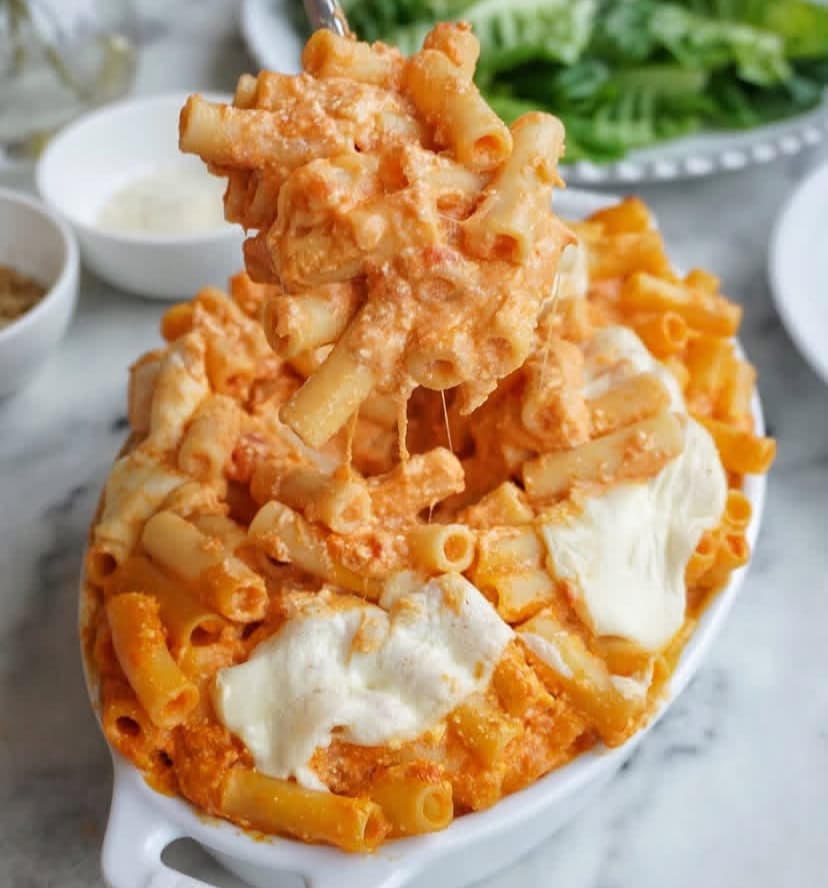
Baked Ziti
Ingredients
- 1 lb ziti or penne
- 1 lb ground beef or Italian sausage, casings removed
- 1 jar marinara sauce, 24 oz, or homemade
- 1 cup ricotta cheese
- 2 cups shredded mozzarella cheese, divided
- 1/2 cup grated Parmesan cheese
- 1 egg
- 1 tsp Italian seasoning
- 1 tsp garlic powder
- 1/2 tsp salt
- 1/4 tsp black pepper
- 1 tbsp olive oil
Instructions
Preheat your oven to 375 degrees F.
Cook the ziti or penne in a large pot of well-salted boiling water until just tender.
Drain and set aside.
Heat the olive oil in a large skillet over medium-high heat.
Add the ground beef or sausage and cook, breaking it into small pieces, until fully browned with no pink remaining.
Drain the fat.
Add the marinara sauce to the skillet and stir to combine with the meat.
Simmer for 5 minutes.
In a large bowl, mix together the ricotta, 1 cup of the shredded mozzarella, the Parmesan, egg, Italian seasoning, garlic powder, salt, and pepper until fully combined and uniform.
Add the cooked pasta to the ricotta mixture and toss until every piece is evenly coated.
Add the meat sauce to the pasta and ricotta mixture and fold everything together gently until well combined.
Transfer the mixture to a greased 9×13 inch baking dish and spread into an even layer.
Scatter the remaining cup of shredded mozzarella evenly over the top.
Cover the dish tightly with foil and bake for 20 minutes.
Remove the foil and bake for another 15 to 20 minutes until the cheese on top is melted, golden, and the edges are visibly bubbling.
Let it rest for 10 minutes before serving.
Pasta Primavera

Ingredients
- 12 oz penne or farfalle
- 1 medium zucchini, sliced into thin half moons
- 1 cup cherry tomatoes, halved
- 1 cup broccoli florets
- 1 red bell pepper, sliced into thin strips
- 1/2 cup frozen peas, thawed
- 4 cloves garlic, minced
- 1/4 cup olive oil
- 3 tbsp butter
- 1/2 cup chicken broth
- 1/2 cup heavy cream
- 1/2 cup grated Parmesan cheese
- 1 tsp Italian seasoning
- 1/2 tsp red pepper flakes
- 1 tsp salt
- 1/4 tsp black pepper
- Fresh basil for finishing, optional
Instructions
Cook the pasta in a large pot of well-salted boiling water until just tender.
Save 1/2 cup of pasta water before draining.
Drain and set aside.
Heat the olive oil in a large skillet over medium-high heat.
Add the sliced zucchini and red bell pepper and cook for 3 to 4 minutes, stirring occasionally, until lightly golden at the edges.
Add the broccoli florets and cook for another 2 to 3 minutes until bright green and just tender.
Push the vegetables to the sides of the pan.
Add the butter to the center of the pan. Once melted, add the minced garlic and stir for 30 seconds.
Pour in the chicken broth and heavy cream and stir everything together.
Bring to a gentle simmer.
Add the Italian seasoning, red pepper flakes, salt, and pepper.
Cook for 3 to 4 minutes until the cream has reduced slightly and thickened.
Add the cherry tomatoes and thawed peas and fold them in gently.
Add the drained pasta and toss everything together until the pasta and all the vegetables are evenly coated in the sauce.
Add the Parmesan and toss until melted in.
Add a splash of the reserved pasta water if it looks too thick.
Taste and adjust the seasoning. Finish with fresh basil if using.
Serve immediately.
Orecchiette with Sausage and Broccoli Rabe

Ingredients
- 1 lb orecchiette
- 1 lb Italian sausage, sweet or hot, casings removed
- 1 bunch broccoli rabe, ends trimmed and roughly chopped
- 5 cloves garlic, thinly sliced
- 1/3 cup olive oil
- 1/2 tsp red pepper flakes
- 1/2 cup grated Pecorino Romano or
- Parmesan cheese
- Salt and black pepper to taste
Instructions
Bring a large pot of well-salted water to a boil.
Add the broccoli rabe and blanch for 2 minutes.
Remove with a slotted spoon and set aside.
Keep the water boiling and add the orecchiette.
Cook according to the package directions until just tender.
Save 1 cup of pasta water before draining.
Drain and set aside.
Heat the olive oil in a large skillet over medium heat.
Add the Italian sausage and cook, breaking it into small rough pieces, until browned and cooked through.
Do not break it too fine.
Irregular pieces of sausage give this dish better texture.
Remove the sausage and set aside, leaving the fat in the pan.
Add the sliced garlic to the pan over medium heat and cook for 2 to 3 minutes until lightly golden.
Add the red pepper flakes and stir for 20 seconds.
Add the blanched broccoli rabe and toss it in the garlic oil for 2 to 3 minutes until heated through and well coated.
Return the sausage to the pan.
Add the drained orecchiette and toss everything together over medium heat.
Add the pasta water a little at a time to bring the dish together into a saucy, cohesive mixture rather than a dry one.
Add the grated cheese and toss until melted in.
Season with salt and black pepper.
Serve immediately with extra cheese.
Classic Fettuccine with Butter and Sage

Ingredients
- 1 lb fettuccine or pappardelle
- 6 tbsp butter
- 12 to 15 fresh sage leaves
- 1 cup finely grated Parmesan cheese
- 1/4 tsp black pepper
- Salt for the pasta water
Instructions
Cook the fettuccine in a large pot of generously salted boiling water according to the package directions until just tender.
Save 1 cup of pasta water before draining.
Drain and set aside.
Melt the butter in a large skillet over medium heat.
Once the butter is fully melted and just beginning to foam, add the whole sage leaves in a single layer.
The butter will sizzle around the sage.
Cook for 1 to 2 minutes, occasionally pressing the sage leaves gently against the bottom of the pan.
Watch the pan closely.
The butter should turn a light amber color and smell nutty and slightly toasted.
This is called beurre noisette or brown butter and it is what gives this dish its extraordinary depth of flavor from such a short ingredient list.
The moment the butter reaches a golden amber color and smells nutty, remove the pan from the heat.
Do not let it get dark brown or it will turn bitter.
Add the drained pasta immediately to the brown butter and sage.
The pasta will sizzle.
Toss well so every strand is coated in the butter.
Add a few tablespoons of the reserved pasta water and toss again.
The water helps distribute the butter and creates a light, glossy emulsion.
Add the Parmesan in two additions, tossing vigorously after each one.
Add more pasta water as needed until the sauce is smooth and coats the pasta evenly.
Season with black pepper and a tiny pinch of salt if needed.
Serve immediately.
American Baked Spaghetti

Ingredients
- 1 lb spaghetti
- 1 lb ground beef
- 1 jar marinara sauce, 24 oz
- 1 can diced tomatoes, 14.5 oz, drained
- 1 small yellow onion, diced
- 2 cloves garlic, minced
- 2 cups shredded mozzarella cheese, divided
- 1/2 cup grated Parmesan cheese
- 1 egg, beaten
- 1 tsp Italian seasoning
- 1 tsp garlic powder
- 1/2 tsp salt
- 1/4 tsp black pepper
- 1 tbsp olive oil
Instructions
Preheat your oven to 350 degrees F.
Cook the spaghetti in a large pot of well-salted boiling water until just tender.
Drain and set aside.
Heat the olive oil in a large skillet over medium-high heat.
Add the diced onion and cook for 3 minutes until soft.
Add the garlic and stir for 30 seconds.
Add the ground beef and cook, breaking it into pieces, until fully browned.
Drain the fat.
Add the marinara sauce, drained diced tomatoes, Italian seasoning, garlic powder, salt, and pepper.
Stir well and simmer for 5 minutes.
In a large bowl, toss the cooked spaghetti with the beaten egg and 1 cup of the shredded mozzarella until the egg and cheese are evenly distributed throughout the pasta.
The egg acts as a binder that holds the spaghetti together in the bake and gives it a cohesive, sliceable texture when done.
Grease a 9×13 inch baking dish.
Press the spaghetti mixture into the dish in an even layer, spreading it firmly across the bottom.
Pour the meat sauce evenly over the top of the spaghetti layer.
Scatter the remaining cup of mozzarella and the Parmesan over the meat sauce.
Bake uncovered for 25 to 30 minutes until the cheese is melted, golden, and bubbling at the edges.
Let it rest for 10 minutes before cutting.
The resting time lets the bake firm up so it cuts into clean portions rather than collapsing.
Pappardelle with Slow-Cooked Beef Ragu

Ingredients
- 1 lb pappardelle or wide egg noodles
- 1 1/2 lbs beef chuck, cut into 2-inch pieces
- 1 can crushed tomatoes, 28 oz
- 2 tbsp tomato paste
- 1 small yellow onion, finely diced
- 2 medium carrots, finely diced
- 3 cloves garlic, minced
- 1/2 cup dry red wine or beef broth
- 2 cups beef broth
- 1 tsp dried rosemary
- 1 tsp dried thyme
- 1 tsp salt
- 1/2 tsp black pepper
- 2 tbsp olive oil
- Grated Parmesan for serving
Instructions
Pat the beef pieces dry with paper towels and season generously on all sides with salt and pepper.
Heat the olive oil in a large heavy pot or Dutch oven over medium-high heat until very hot.
Add the beef pieces in a single layer without crowding.
Cook for 3 to 4 minutes per side without moving them until a deep brown crust has formed on each surface.
Brown all sides of every piece.
This browning is not just for color.
It creates a layer of caramelized flavor on the exterior of the beef that dissolves into the sauce during the long braising time
And makes the finished ragu incomparably richer than one made from unbrowned meat.
Remove the browned beef and set aside.
Reduce the heat to medium.
Add the diced onion and carrots to the same pot and cook for 5 minutes until soft.
Add the garlic and stir for 30 seconds.
Put the tomato paste and stir for 1 minute until slightly darkened.
Pour in the red wine or beef broth and scrape up all the browned bits from the bottom of the pot.
Return the beef to the pot.
Add the crushed tomatoes, beef broth, rosemary, and thyme.
Stir well and bring to a boil.
Reduce the heat to the lowest setting, cover with a lid, and cook for 2.5 to 3 hours, stirring occasionally, until the beef is completely tender and falls apart when pressed with a spoon.
Use two forks to shred the beef directly in the pot into rough strands.
Stir everything together and taste.
Adjust the salt and simmer uncovered for 10 more minutes to thicken if needed.
Cook the pappardelle in a large pot of well-salted boiling water until just tender.
Save 1/2 cup of pasta water.
Drain and serve topped with a generous ladle of the beef ragu.
Add pasta water to the sauce in the pot if it needs loosening.
Serve with Parmesan.
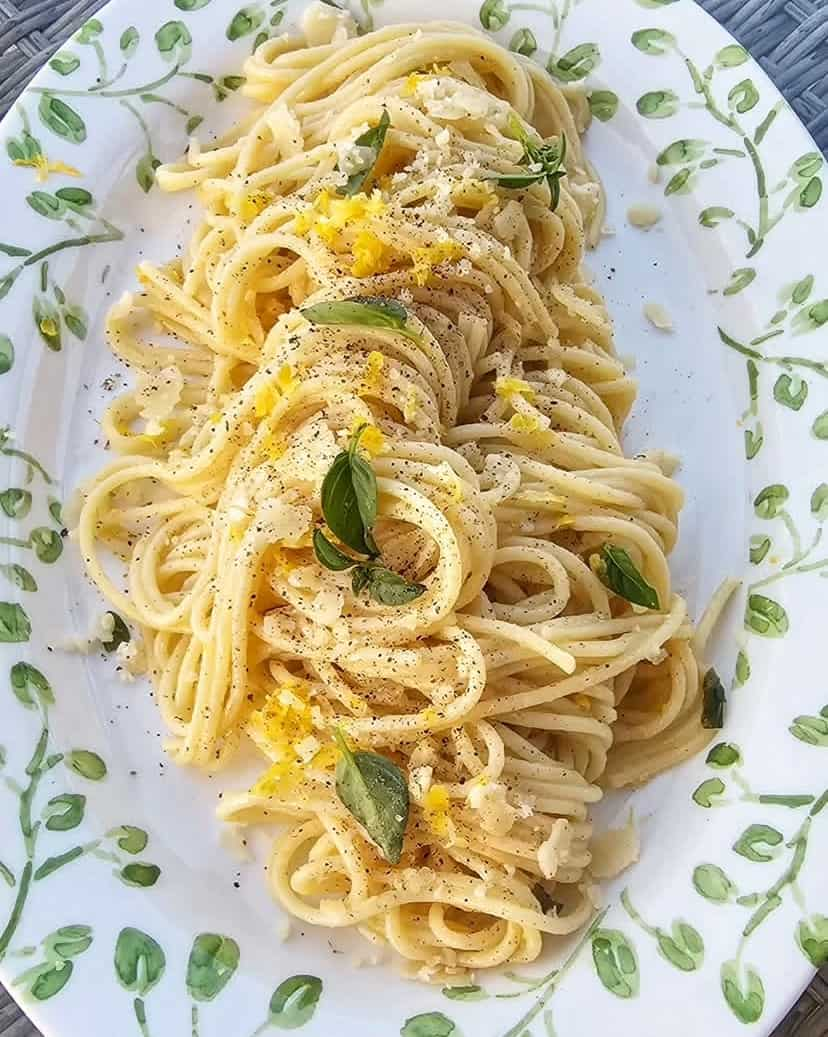
Pasta al Limone
Ingredients
- 1 lb spaghetti or linguine
- 1/2 cup heavy cream
- 6 tbsp butter
- Juice of 2 large lemons
- 1 1/2 tsp lemon zest
- 1 cup finely grated Parmesan cheese, plus more for serving
- 1/2 tsp black pepper
- Salt for the pasta water and to taste
Instructions
Cook the spaghetti in a large pot of generously salted boiling water according to the package directions until just tender.
Save 1 cup of the pasta cooking water before draining.
Drain and set aside.
In a large skillet over medium heat, melt the butter.
Once fully melted and slightly foamy, pour in the heavy cream and stir to combine.
Bring to a gentle simmer and cook for 2 to 3 minutes until slightly thickened.
Add the lemon juice and lemon zest.
Stir well.
The sauce will look like it is about to separate or curdle at this point which is normal.
It comes back together once the pasta and starchy water are added so do not be alarmed.
Add the drained pasta to the pan and toss continuously while adding 1/4 cup of the pasta water.
Toss vigorously for 1 to 2 minutes until the sauce becomes smooth and emulsified and coats every strand.
The starchy water and the motion of tossing is what brings the sauce together.
Add more pasta water as needed, a few tablespoons at a time, until the consistency is glossy and saucy without being heavy.
Remove from the heat.
Add the Parmesan in two additions, tossing vigorously after each one until fully melted in.
Season with black pepper and a small pinch of salt if needed.
The lemon flavor should be bright, clean, and present in every bite without tasting sour.
Serve immediately with extra Parmesan.
Classic Pasta e Ceci (Pasta and Chickpeas)

Ingredients
- 8 oz ditalini or any small pasta shape
- 2 cans chickpeas, 15 oz each, drained and rinsed, divided
- 1 can diced tomatoes, 14.5 oz, with all the liquid
- 4 cloves garlic, thinly sliced
- 1 small yellow onion, finely diced
- 2 stalks celery, finely diced
- 1/4 cup olive oil, plus more for serving
- 1/2 tsp dried rosemary
- 1/2 tsp red pepper flakes
- 3 cups chicken broth or water
- 1 tsp salt
- 1/2 tsp black pepper
- Grated Parmesan and extra olive oil for serving
Instructions
Heat the olive oil in a large heavy pot over medium heat.
Add the finely diced onion and celery and cook for 5 to 6 minutes, stirring occasionally, until both are completely soft.
Add the sliced garlic and cook for 2 more minutes until lightly golden.
Add the dried rosemary and red pepper flakes and stir for 30 seconds.
Add the diced tomatoes with all their liquid.
Stir well and cook for 3 minutes.
Add one full can of the drained chickpeas and the chicken broth or water.
Season with salt and pepper.
Bring to a boil, then reduce to a gentle simmer.
Take the second can of drained chickpeas and add them to a small bowl.
Use a fork or the back of a spoon to mash them into a rough paste.
They do not need to be perfectly smooth.
A chunky paste is fine and even preferable.
Add the mashed chickpeas to the pot and stir in well.
The mashed chickpeas thicken the broth naturally into a stew-like consistency that is creamy and hearty without any cream.
Simmer for 15 minutes, stirring occasionally.
Add the dry uncooked pasta directly to the pot.
Cook for 8 to 10 minutes, stirring frequently, until the pasta is tender and has absorbed some of the broth.
The dish should look thick and hearty, somewhere between a thick soup and a stew, rather than watery or brothy.
Add a splash of broth or water if it thickens too much before the pasta finishes.
Taste and adjust the salt.
Serve in wide bowls with a generous drizzle of good olive oil over each portion and Parmesan grated over the top.
A Few Smart Ingredient Swaps
Pecorino Romano and Parmesan are largely interchangeable across every recipe on this list.
Pecorino is saltier and sharper and Parmesan is milder and nuttier.
Either works well in any of these dishes.
Pancetta and bacon are interchangeable in any recipe that calls for either one.
Guanciale is the traditional choice for carbonara and Amatriciana but pancetta is a widely available substitute.
Any long pasta including spaghetti, linguine, fettuccine, or bucatini works in place of another in any long pasta recipe.
Any short pasta including penne, rigatoni, ziti, or fusilli works in place of another in any short pasta recipe.
Ground beef and ground pork are interchangeable in Bolognese and baked pasta dishes.
Using half beef and half pork gives the richest result.
Storage Tips
All baked pasta dishes including the lasagna, baked ziti, and baked spaghetti keep well in airtight containers in the fridge for three to four days and reheat beautifully.
Cover with foil and warm in a 350 degree F oven for 15 to 20 minutes,
Or microwave individual portions with a splash of water added over the top to restore moisture.
Sauced pasta dishes like Bolognese, marinara, and ragu store well but the pasta will continue to absorb the sauce in the fridge and may look dry when reheated.
Add a splash of water or broth before reheating and stir well to loosen.
Carbonara and Cacio e Pepe are best eaten immediately and do not reheat well because the egg and cheese-based sauces break when reheated.
Make only as much as you plan to eat.
Tips for Cooking Pasta the Right Way
Always salt your pasta water generously before the pasta goes in.
The water should taste noticeably salty, similar to mild sea water.
Pasta that cooks in properly salted water is seasoned from the inside out and tastes significantly better in the finished dish than pasta cooked in plain or lightly salted water.
Always save pasta water before draining.
The starchy water is a critical ingredient in nearly every sauce on this list because it helps the sauce emulsify and cling to the pasta rather than pooling at the bottom of the bowl.
Cook pasta until just al dente and not a minute longer.
It will continue cooking slightly when added to the hot sauce so pulling it slightly underdone from the water gives you a perfect texture by the time it reaches the plate.
Add the pasta to the sauce rather than the sauce to the pasta whenever possible.
Tossing the pasta in the sauce over heat allows the pasta to absorb the flavor of the sauce and finish cooking in it,
Which results in a far more cohesive and flavorful dish than simply ladling sauce over a bowl of plain noodles.